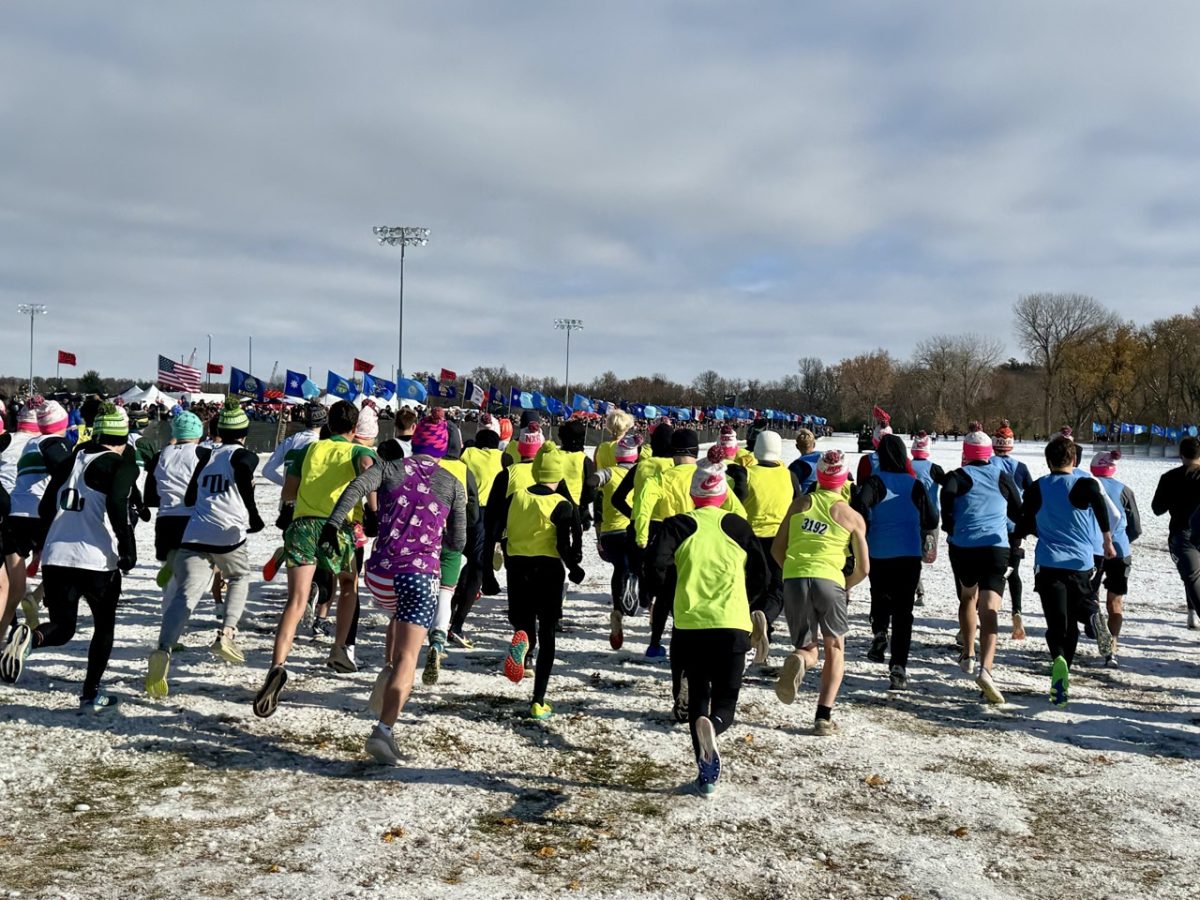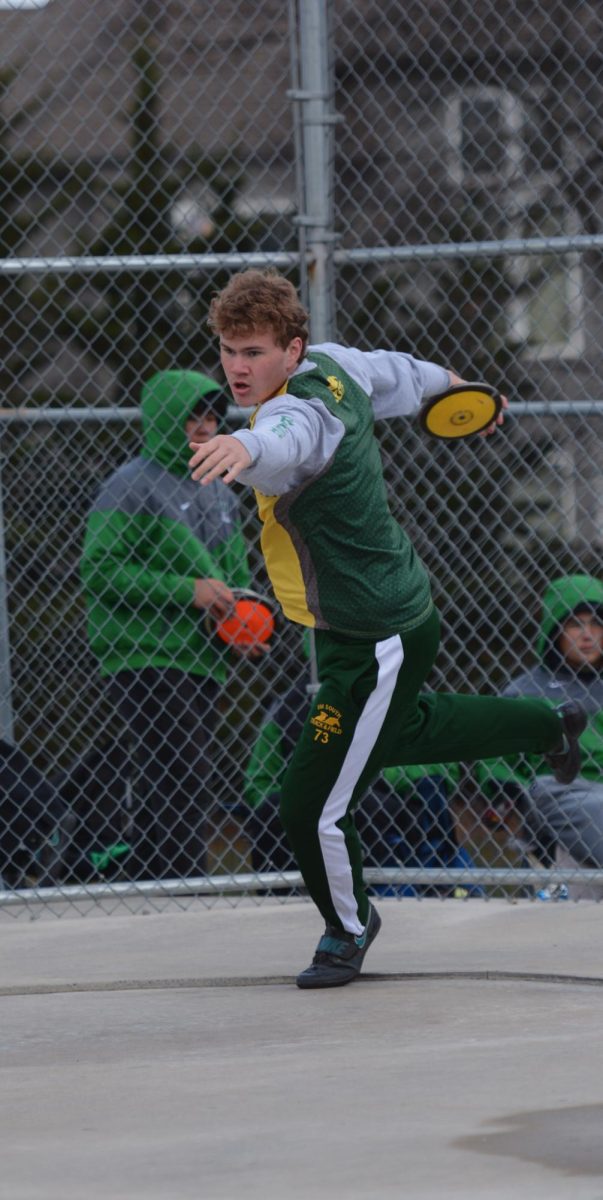
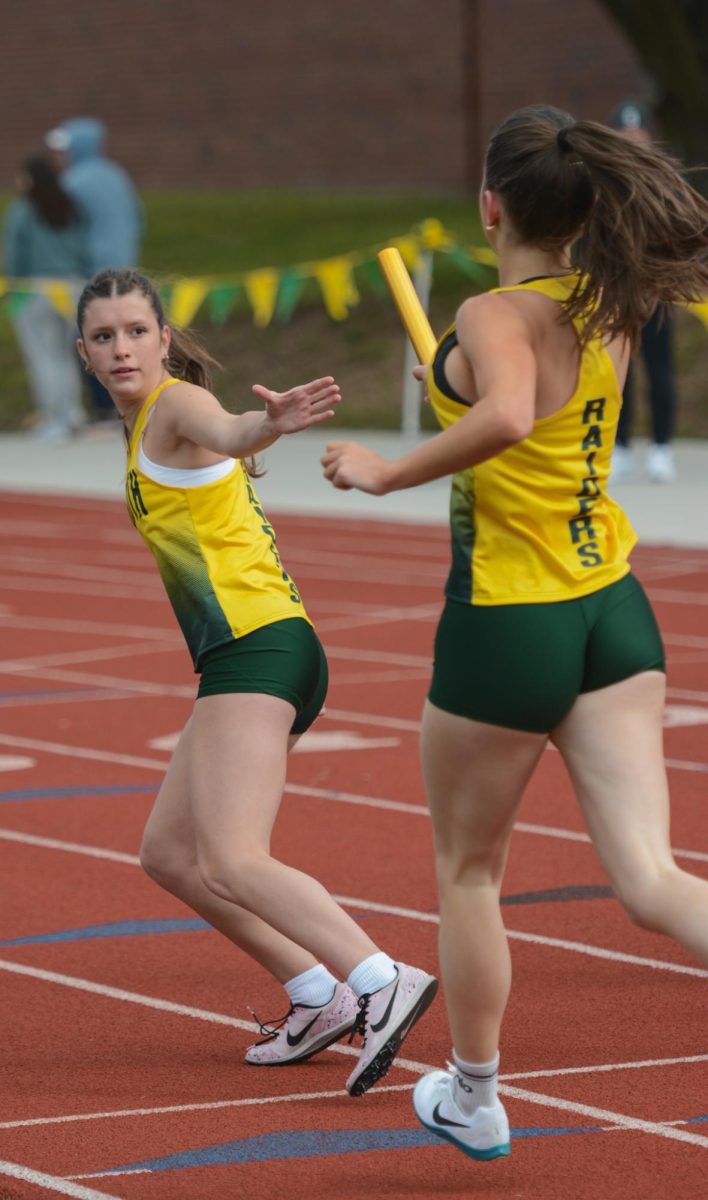
With clear blue skies over the South stadium at, athletes from schools across the state and midwest, some as far as Colorado, compete in South Relays, one of the most well known and regarded high school track meets in Kansas.
With its expanding fame and the large amount of competition that South Relays has attracted over the last decade, the meet has reached a milestone this year in its eclipse of North Relays–a very large track meet held at SM North–in terms of number of athletes competing. This growth has been a point of pride for the team and coaches, but may cause a possible transformation to the meet some years into the future.
“When it all shakes out in the end, we’ll probably have more total competitors across the events than North relays has had the last few years,” track and field head coach J.J. Wannamaker said. “We don’t limit our entries for the team, so that’s a piece of it. So there’s a little asterisk there. But we’re, you know, we’re still growing, and we’re kind of reaching a point where we may have to cap off.”
Wannamaker, who has been the track and field head coach since 2007, has been largely responsible for South Relays growth through swapping out some relay events for individual ones, as well as adding individual events to the meet schedule. Wannamaker’s leadership, paired with athlete and team desires for fast competition, has driven the number of full teams attending the meet into the low 20’s.
“When I first took over, the meet had dwindled and gotten pretty small,” Wannamaker said. “We were down to only seven or eight teams at the time. Some teams were kind of talking about pulling back until I made some changes. At that time too, there was a very large meet hosted in the Blue Valley district that was pulling a lot of teams that would historically come to South. But we’ve steadily grown.”
Rising to 14 teams in 2016, South Relays would continue to grow over the next five years, experiencing growth following the COVID-19 pandemic that brought the number of teams being represented at the meet up to 30. Encouraged by their coaches, JV athletes will come and help out wherever they can. Over the last few years, with teams traveling from across state lines to compete, South Relays has seen multiple meet and state records, displaying its competitive environment.
“I’m sure it’s gonna be pretty hard competition,” senior Shea Disalvo said. “I mean, I’ve been going to this meet since my freshman year, so I’ve gotten used to this many people at a meet, and it’s really cool to see just such talented runners because you don’t see that at a lot of meets and there’s a lot of it at this one.”
With the amount of teams, athletes, spectators, and workers to account for, the organization of the meet starts early. The number of variables going into the meet make test runs important. Wannamaker has used previous meets held at SM South, such as the Blue Valley-SM Northwest-SM South All Comers Triangular, to brush up on what might need work and how he can more efficiently run the meet in a sort of pre-meet test.
“My organization and planning of South relays will start April 5, after we finish it and that’s more of like, ‘okay, what are some things I can change and do differently?’” Wannamaker said. “I typically start in November, ramping things up, surveying teams, making sure I know what teams are coming back. I start working on our event workers as early as I can, making sure we have people to be there to help us out.”
With planning for the meet being an almost year round task, looking through what needs to change, opinions from attending teams on what went well and what didn’t, and managing equipment, there’s a lot that goes into making the meet function.
“Especially here, as we wind down this season in May, I’ll go through our equipment, because we want to make sure we’ve got good equipment to host the meet,” Wannamaker said. “So we’ll have to figure out what things we may need to order for the future. I’ve got to coordinate with our district timing crew, which isn’t real hard to do, but we’ve got to make sure we have those workers and all the timings taken care of and the advanced entries are done. So it really ramps up for me more in February. And then obviously the two weeks leading up to the meet, those are the most critical. Those are the ones where I’m making contact with our incoming teams. I’m finalizing things that we need to do on the track.”
In addition to Wannamaker and his coaching staff, the athletic department serves a major role in running the meet, buying food for all of the coaches and workers, paying the workers, selling tickets, reserving the stadium, and more. The Athletics department also plays a major role in additional planning for situations where, for whatever reason, the meet is rescheduled.
“Last year. I don’t know if it was cold or a storm, but last year we had to move it to Monday because of the weather, and some teams opted out because they were going to travel four or five hours, which I totally understand, but we still held South relays,” athletic director Mark Mahoney said. “What happens is people that do help work it have plans on Monday, or they have a family, or they’ve got all the other things they’ve got going on. So it’s very difficult, because you plan for one thing, you have all the workers, and then you have to move it. And we totally understand why people have to go pick up their kids after school or whatever. So this job is a lot of juggling and trying to catch them all before the fall.”
With help from his coaching staff, Wannamaker has the ability to distribute some of the challenges that hosting such a large meet poses. From getting JV athletes to help out with setting up and taking down the hurdles, to assisting with organizing the athletes, the coaching staff is a major force in making the meet run well and regulating the stress that comes with it.
“Coach Wanamaker is incredibly organized and has an entire list of things that need to get done in all of the different event areas, so we’re going off his guidance to make sure we get all of that stuff ready in time,” sprints coach Kailey Zvosec said. “Our wonderful JV athletes also help us out with that as we prepare for the weekend and then during actual South relays, it’s kind of on us to make sure that our event area is running smoothly. There are definitely moments that are stressful, but that’s where we have each other, and again, the wonderful volunteers who help us make things run smoothly and help lower our stress load.”